01 Database
LumineDB
Purpose-built for teams who need a database that speaks their language.
Pending Release
RustWASMNAPI-RSNext.js
With an expansive career in building enterprise systems for industry-leading companies, I specialize in highly scalable architecture, distributed services, and technical leadership.
Systems built with intention. Each one probes a question about how software should behave.
Purpose-built for teams who need a database that speaks their language.

Rethinking how applications store and retrieve the data they reach for most often.

AI orchestration that's inspired by nature.

A harmonious design system that derives its rhythm and proportion from patterns found in nature.

A catalog of advanced software patterns and computational models, including research artifacts, simulations, etc.

A re-imagined mechanism for routing signals.
Visual stories from the things I'm building.
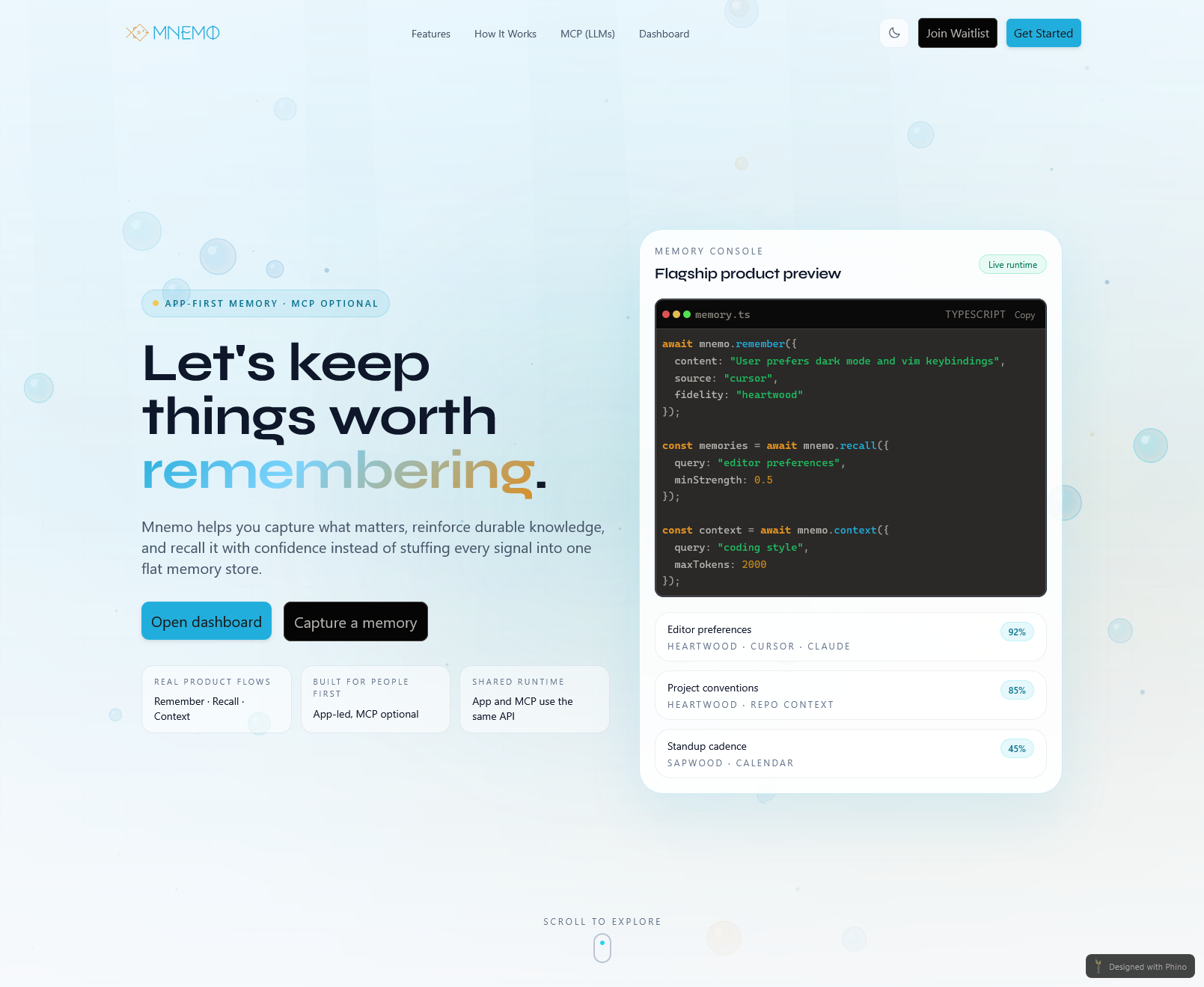
A quick product preview for Mnemo so the work has a real front door while the deeper product continues to take shape.
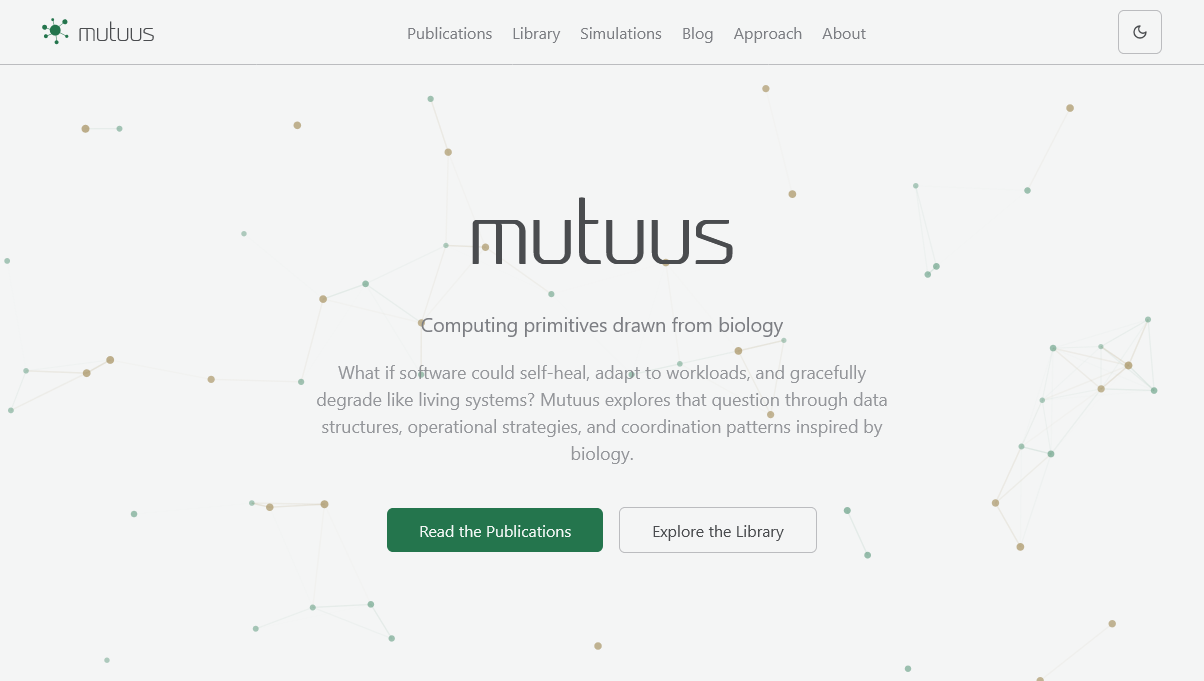
With the first research paper describing the Mutuus's research process being published, it was time to unveil the website which is intended to grow as more research is completed.
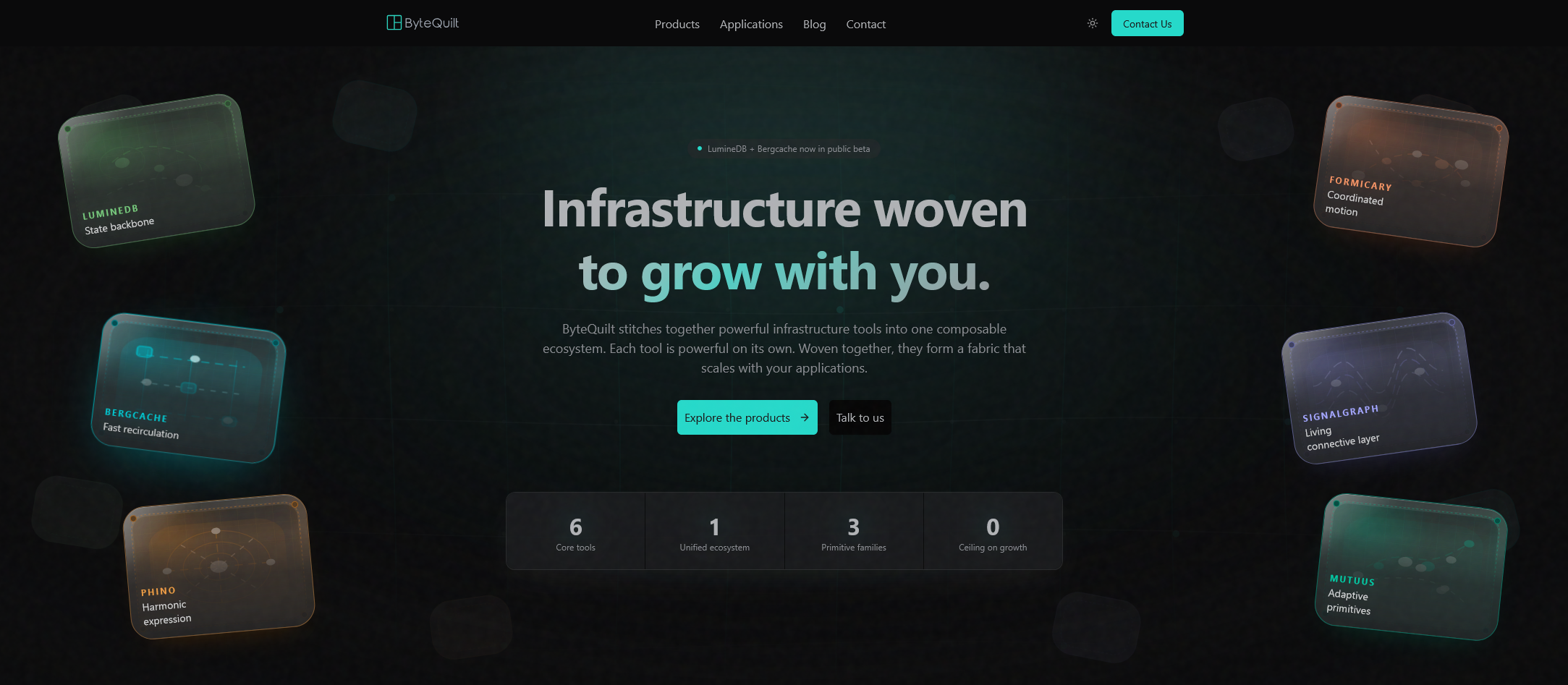
Finally got around to just building the ByteQuilt website beyond the "coming soon" pages.
Essays on software, systems, leadership, and the culture of building. Plus the occasional research paper.
I left an AI agent colony running idle for a week. It ate 4.5 GB of RAM doing absolutely nothing. Here's why, and what it taught me about the hidden cost of remembering everything.
The software industry has developed an appetite for tearing down patterns that far outpaces its appetite for building something better. What if we stopped debating whether projects "need" good architecture and started making it invisible?
I caught my AI research assistant biasing my work toward conventional answers for months. The training data won. Here's what that means for anyone using AI to do original work.
The Nacre Array is a segmented dynamic array with three properties absent from conventional contiguous arrays: (1) per-element metadata headers that make elements self-describing without external bookkeeping, (2) a four-state thermal machine (Hot/Warm/Cold/Compressed) that allows cold segments to compress in place, and (3) fracture planes at segment boundaries that enable structural splits without copying element payloads.
ByteQuilt
Intercontinental Exchange (ICE) via Strategic Data Systems
DocuSign
Philips
Microsoft
Philips
Boston University

Contributions across open source and personal projects